
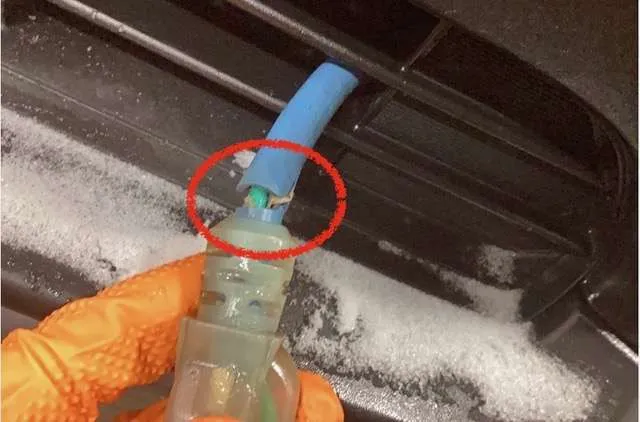
If you have ever plugged in your vehicle on a frigid morning only to have the breaker trip, you know the frustration of discovering your engine is ice-cold when you thought it had been warming all night. At Metropolitan Garage, we see this scenario play out repeatedly each winter, and the culprit is almost always the same: poorly routed engine block heater cords.
Let us explore the science behind why sloppy cord routing causes electrical failures and why taking the time to route cords properly is one of the most important aspects of a winter engine heater installation.
Understanding the Electrical Load
Engine block heaters and heating pads typically draw between 400 and 1,500 watts of power, translating to roughly 3 to 12 amps on a standard 120-volt circuit. Most household circuits are rated for 15 or 20 amps, which seems like plenty of headroom. However, circuit breakers are designed to trip when they detect abnormal conditions, not just overcurrent but also ground faults, arcing, and resistance heating within the circuit itself.
When cords are improperly routed, they create exactly these kinds of abnormal conditions.
The Ground Contact Problem: Moisture and Resistance
Cords dragging on the ground face constant exposure to snow, ice, road salt, and moisture. When insulation becomes compromised even microscopically, moisture creates alternate current paths. This is where the physics gets interesting.
Water, especially when contaminated with road salt, becomes an electrolytic conductor. The electrical current finds pathways through moisture to ground, creating what is known as a leakage current. Ground Fault Circuit Interrupter (GFCI) breakers detect this imbalance between the hot and neutral wires, as little as 5 milliamps of difference, and trip to prevent shock hazards.
Additionally, moisture infiltration increases the electrical resistance in connections and along the cord’s length. Ohm’s Law tells us that resistance in a circuit generates heat (Power equal to Current squared times Resistance). As resistance increases from corrosion and moisture, heat builds at these points. This heat further degrades insulation, creating a vicious cycle that eventually causes catastrophic failure or nuisance tripping.
Thermal Degradation Near Hot Engine Components
Perhaps the most dangerous routing mistake is allowing heater cords to rest against or near exhaust manifolds, turbochargers, or other high-temperature engine components. Standard extension cord insulation, typically PVC or rubber, begins to soften around 140 degrees Fahrenheit and can degrade rapidly at temperatures above 200 degrees Fahrenheit.
Exhaust manifolds routinely reach 600 to 1,000 degrees Fahrenheit during engine operation. Even after the engine is shut off, residual heat keeps these components dangerously hot for extended periods. A cord resting against an exhaust manifold undergoes thermal degradation, where the polymer chains in the insulation break down, becoming brittle and cracked.
Once the insulation is compromised, you have exposed conductors in close proximity to grounded metal engine components. This creates a direct short circuit path. When you plug in the heater, current rushes through this low-resistance path to ground, and the breaker trips instantly to prevent fire or electrical shock.
Even if the damage does not cause immediate tripping, the compromised insulation may allow arcing, small electrical discharges that jump through the damaged insulation to nearby metal. Arc faults draw irregular, pulsing current that modern Arc Fault Circuit Interrupter (AFCI) breakers detect and interrupt.
Mechanical Stress from Suspension Movement
Attaching heater cords to moving suspension components, control arms, struts, or anti-roll bars, subjects the wiring to repeated flexing and tension cycles. This is a classic failure mode in electrical engineering.
Every time the suspension compresses or extends, the cord bends, stretches, and potentially rubs against sharp edges. The copper conductors inside are made of many fine strands to provide flexibility, but repeated bending causes metal fatigue. Individual strands break, reducing the effective conductor cross-section and increasing resistance at that point.
As strands break, the remaining conductors must carry the full current load. Remember that heat generation is proportional to current squared, I squared times R. Fewer strands mean higher current density in the surviving conductors, leading to concentrated heating. This localized hot spot accelerates insulation breakdown.
Additionally, the strain relief at the plug connection, where the cord enters the plug body, experiences maximum mechanical stress. The constant pulling and flexing fatigues these connections, creating intermittent opens or high-resistance joints. These poor connections generate significant heat through resistive heating, potentially melting the plug or causing the breaker to trip due to the overcurrent condition.
The Hidden Problem: You’re Cold Starting Without Knowing It
Here is what makes improper cord routing particularly insidious: you may not realize there is a problem until real damage occurs. You diligently plug in your vehicle every night, assuming the block heater is warming your engine. In reality, the damaged cord has created an open circuit somewhere in the system. No current flows, no heating occurs, but you have no indication of the failure.
Morning after morning, you are cold starting your engine, thinking it was pre-warmed. Cold starts cause exponentially more engine wear than warm starts. Oil is thick and slow-moving in frigid temperatures, meaning critical engine components run with inadequate lubrication during those crucial first moments. Fuel does not atomize properly in a cold engine, leading to incomplete combustion, cylinder washing, and dilution of your engine oil.
The cumulative effect of repeated cold starts instead of warmed starts can mean thousands of dollars in premature engine wear over a single winter season.
The Smart Routing Solution
Proper cord routing is not complicated, but it does take time and attention to detail. At Metropolitan Garage, our technicians follow these principles:
Secure cords away from moving parts using zip ties or dedicated clips attached to the vehicle frame or body, never to suspension components.
Route cords away from heat sources with at least 6 inches of clearance from exhaust components, and use heat-resistant sleeving in areas where proximity is unavoidable.
Keep cords elevated off the ground where practical, minimizing exposure to moisture and preventing physical damage from being driven over or snagged.
Use strain relief at all connection points to prevent mechanical stress from concentrating at vulnerable plug interfaces.
Select appropriate cord ratings using cords rated for outdoor use in cold temperatures, look for cords rated to minus 40 degrees Fahrenheit, with sufficient amperage capacity for the heater load.
The Bottom Line
The physics is clear: poorly routed cords create electrical resistance through moisture exposure, thermal degradation from heat exposure, and mechanical failure from repeated flexing. Any of these conditions can trip your circuit breaker or, worse, create a fire hazard.
More importantly, damaged cords often fail silently, leaving you to cold start your engine day after day, accumulating wear you cannot see but will eventually pay for in repair costs.
Taking the extra hour during installation to route cords properly is not perfectionism, it is practical physics. At Metropolitan Garage, we understand that winter reliability is not just about having the right equipment; it is about installing it correctly the first time.
Your engine block heater is an investment in your vehicle’s longevity and your winter comfort. Do not let a $550 routing mistake compromise a $1000 heating system and cause thousands in engine damage. Smart cord routing takes time, but the science shows it is time well spent.